Cart
0
A great coffee can be ruined in the last few minutes before it ever reaches your cup. That is why the question of air roasted vs drum roasted matters. Both methods can produce excellent coffee, but they apply heat differently, manage chaff differently, and create noticeably different flavor experiences. If you want a cup that tastes bright, smooth, rich, and clean without the bitter edge, roasting method deserves your attention.
For everyday coffee drinkers, the difference is not just technical. It can show up in the first sip: a clean finish instead of smoky heaviness, distinct chocolate or fruit notes instead of a flat roasted taste, and a smoother cup that does not need cream and sugar to cover up bitterness.
Air Roasted vs Drum Roasted: The Core Difference
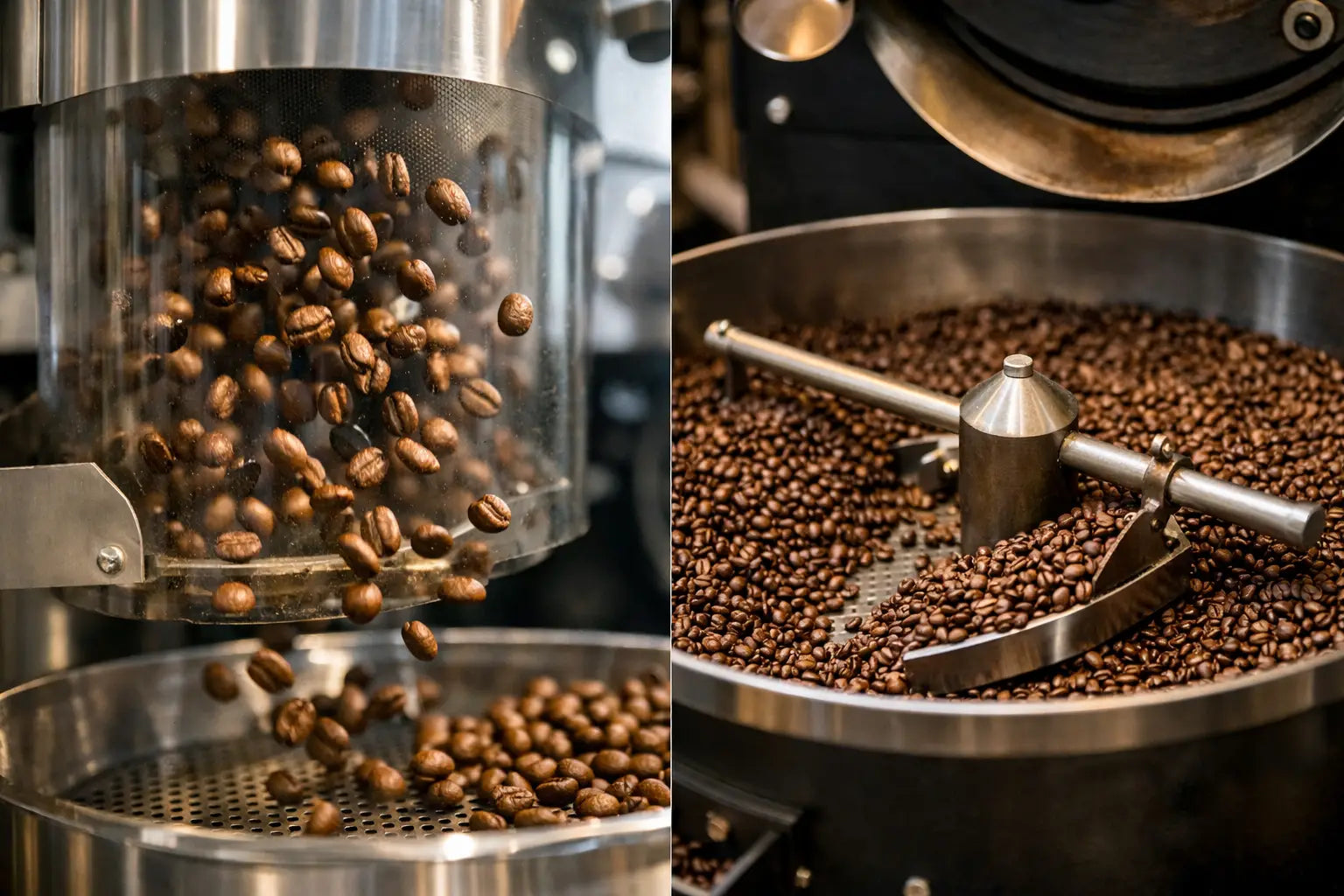
Drum roasting is the traditional method. Green coffee beans tumble inside a rotating metal drum that is heated from the outside. The drum transfers heat to the beans through contact, while hot air also circulates inside the roaster. It is a proven approach with a long history and plenty of room for skilled craftsmanship.
Air roasting, often called fluid-bed roasting, works from a different direction. A powerful stream of hot air lifts and circulates the coffee beans in a controlled chamber. Picture a coffee tornado: each bean is suspended, moving freely, and surrounded by clean, even heat rather than sitting against a hot metal surface.
That movement is the key distinction. In a drum, beans repeatedly contact hot metal and one another. In a fluid-bed roaster, heat reaches the beans more directly and evenly through moving air. Roasters can precisely manage airflow, temperature, and time while keeping the batch in constant motion.
Neither machine can make poor-quality beans taste extraordinary. Great coffee starts with careful sourcing, proper storage, and a roaster who understands development. But the roasting environment has a major effect on how clearly the bean’s natural character reaches the cup.
How Air Roasting Shapes Flavor
Coffee beans are full of compounds that change rapidly under heat. Sugars caramelize, acids shift, moisture escapes, and aromatic compounds develop. The goal is not simply to make beans brown. The goal is to develop sweetness, body, and depth while protecting the qualities that made the coffee worth buying in the first place.
Fluid-bed air roasting is known for producing a clean, lively cup because the beans receive highly consistent heat exposure. With fewer hot contact points, there is less opportunity for surface scorching. That can help preserve the clarity of a single-origin coffee, whether its natural notes lean toward cocoa, toasted nuts, citrus, berry, or brown sugar.
Air roasting also separates chaff - the papery skin that comes off beans during roasting - from the batch as it roasts. The airflow carries this material away rather than allowing it to linger around the beans. That cleaner roasting environment can reduce the smoky, ashy flavors that some drinkers associate with dark or over-roasted coffee.
The result is often described as brighter and cleaner, but that does not mean thin or sour. When the roast is properly developed, air-roasted coffee can carry real richness and a round mouthfeel. The difference is that the flavor of the bean remains recognizable. A medium roast can taste full without tasting burnt. A dark roast can feel bold without turning harsh.
What Drum Roasting Does Well
Drum roasting has earned its place for good reason. Experienced drum roasters can create coffees with heavy body, deep caramelization, and an unmistakable roasted character. For blends designed around a traditional diner-style profile or a very dark, smoky French roast, that contact heat can be part of the intended experience.
A drum also provides thermal mass. Once the metal is hot, it holds heat steadily, which can be useful for larger batches and particular roast styles. Many respected specialty roasters use drum machines with exceptional results because they carefully manage charge temperature, airflow, drum speed, and the coffee’s development after first crack.
The trade-off is that drum roasting demands close control to avoid unevenness. Coffee nearest a hot drum surface may receive more conductive heat than beans elsewhere in the batch. If a roast moves too fast or heat is not managed well, the result can include scorching, tipping, baked flavors, or bitterness. Those outcomes are not inevitable, but they are risks a capable roaster must actively prevent.
This is why the better question is not whether all drum-roasted coffee is bad. It is not. The real question is what kind of cup you want and how much consistency you expect from one batch to the next.
Bitterness Is Not a Roast Level Requirement
Many people assume bitterness is simply the price of drinking bold coffee. It is not. Darker roasts naturally develop more roast-forward flavors and less of the bean’s original acidity, but a dark cup does not have to taste charred, oily, or rough.
Bitterness usually becomes prominent when beans are overdeveloped, unevenly roasted, stale, or brewed with water that is too hot for too long. Roast defects can also hide behind labels like “extra bold.” A coffee should taste strong because it has depth, not because it tastes burned.
Air roasting gives a roaster an advantage in pursuing that balance. Clean, circulating heat makes it easier to develop the roast evenly while reducing the chance that a few beans or bean surfaces take on excessive heat. That is especially valuable for drinkers who want a satisfying cup black, although it also makes coffee more enjoyable with milk, in a pod brewer, or over ice.
At House of Franks Coffee, precision fluid-bed roasting is built around that simple promise: pure flavor, fresh character, and no bitterness. It is a practical difference you can taste, not a technical story for its own sake.
Freshness Still Comes First
Roasting method is powerful, but it cannot rescue stale coffee. Once coffee is roasted, it begins releasing carbon dioxide and gradually losing aromatic compounds. A bag that has sat in a warehouse or grocery aisle for months may still brew, but much of its sweetness and fragrance may already be gone.
That is why roast-to-order small batches matter. Freshly roasted coffee gives the flavor created during roasting a chance to show up in your brewer. The clean sweetness of a breakfast blend, the cocoa depth of a medium roast, or the bold finish of a French roast is more vivid when the coffee has not spent months waiting on a shelf.
Organic sourcing matters here, too. Coffee is an agricultural product, and better raw material gives the roaster more to work with. Carefully sourced, 100% USDA Certified Organic beans paired with precise roasting create a cup that reflects care at every stage, from farm to grinder to morning mug.
Which Roast Method Is Right for You?
Choose based on the cup you enjoy, not on a rule that one method must win for every drinker. If you love intensely smoky, heavily caramelized coffee and a dense traditional roast profile, a well-executed drum roast may be exactly what you want.
If you are tired of grocery-store bitterness, prefer distinct flavor over char, or want coffee that stays smooth as it cools, air roasting is worth seeking out. It is particularly appealing for black-coffee drinkers and for anyone who wants their organic coffee to taste as clean as the standards behind it.
Your brew method matters as well. A clean air-roasted medium coffee can shine in a drip maker, pour-over, French press, or cold brew. For pods and automatic brewers, which can sometimes exaggerate bitterness, a smoother roast profile can make an even bigger difference.
Better Heat, Better Intent
The best cup is not defined by flashy equipment or a dark, shiny bean. It is defined by attention: quality green coffee, clean heat, a roast curve suited to the bean, and freshness that has not been traded away for convenience.
The next time you open a bag, taste before adding anything. Notice whether the coffee finishes cleanly, whether sweetness comes through, and whether the flavor feels like the bean or just the roast. That small pause can turn a daily habit into a better brew - and make every cup matter.