Cart
0
That bright, smooth cup you loved when the bag first arrived can fade long before you finish it. Knowing how to store fresh coffee is one of the simplest ways to protect the rich aroma, clean flavor, and no-bitterness finish that make a better roast worth buying.
Coffee is not shelf-stable in the way most pantry goods are. Once roasted, it begins a slow conversation with oxygen, light, heat, and moisture. Give those four forces too much access, and even excellent organic coffee can taste flat, papery, dull, or unexpectedly harsh. The good news is that fresh coffee does not need complicated equipment. It needs smart habits and a little restraint.
How to Store Fresh Coffee at Home
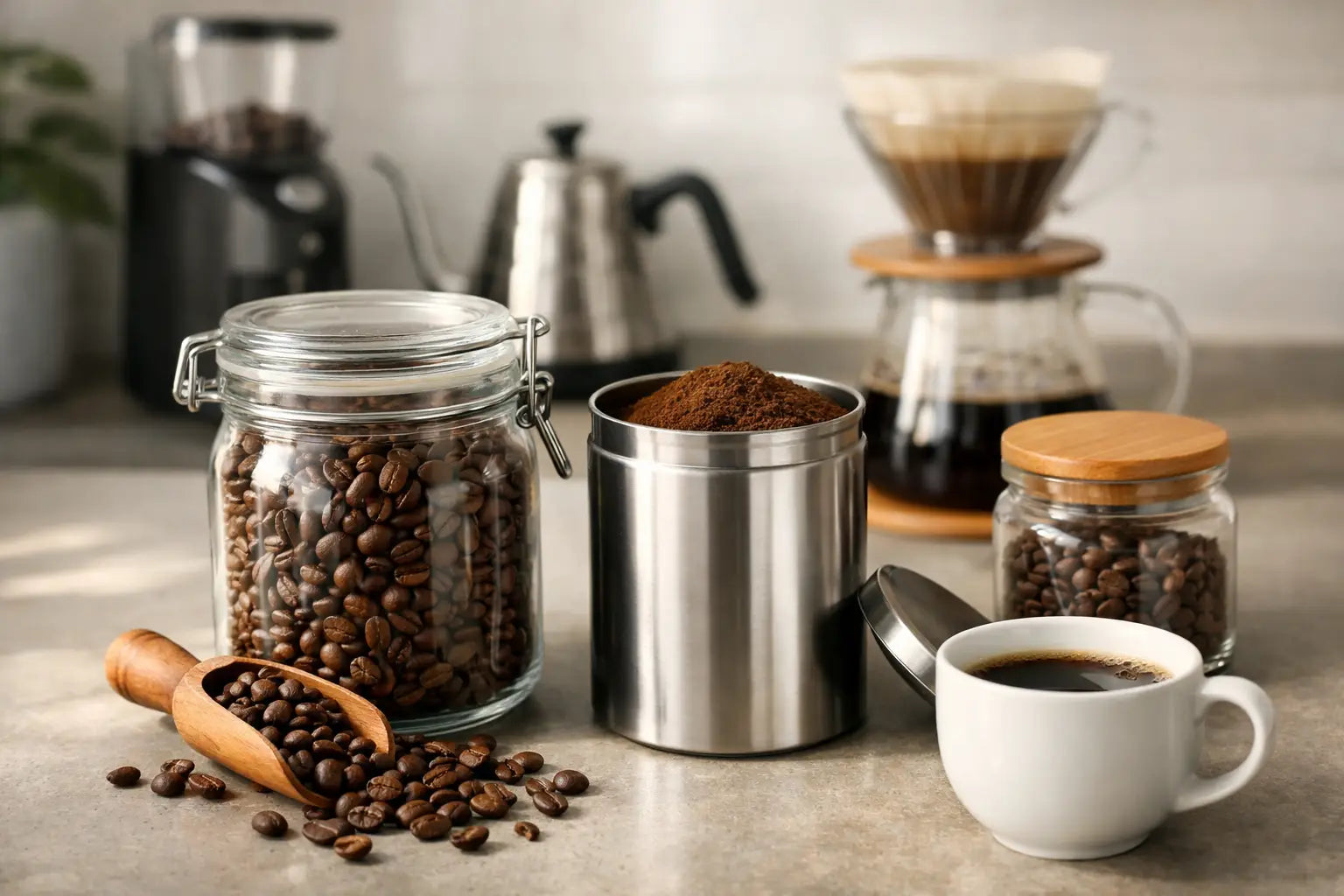
For most households, the best place to store coffee is in an airtight, opaque container at room temperature, kept inside a cool, dark cabinet. That is the foundation. Not the countertop beside a sunny window, not the shelf over the oven, and not the refrigerator door where temperatures shift every time someone reaches for milk.
Choose a container that seals tightly and blocks light. Stainless steel and ceramic canisters work well. An opaque, food-safe container with a dependable gasket seal is also a strong choice. Clear glass may look good on the counter, but it invites light exposure unless it stays inside a dark cabinet.
If your coffee arrives in a resealable bag with a one-way valve, leaving it in that bag can be perfectly practical. Quality coffee bags are designed to limit air exposure while allowing roasted beans to release carbon dioxide. Rather than pouring a full bag into a large canister, keep the bag tightly sealed and place it in a cabinet. If you prefer a canister, choose one sized close to the amount of coffee you keep on hand. A half-empty oversized container holds more air, and more air means faster flavor loss.
Freshness is not about creating a laboratory. It is about reducing coffee's contact with the elements that steal its character.
The Four Things That Make Coffee Go Stale
Oxygen flattens flavor
Oxygen is coffee's biggest everyday enemy. It gradually breaks down the aromatic compounds responsible for chocolatey depth, lively fruit notes, warm sweetness, and that first-brew fragrance that fills the kitchen. An airtight seal slows this process, but it cannot stop it forever.
This is why buying more coffee than you can reasonably drink is rarely a bargain. A giant bag may cost less per ounce, but not if the final third tastes tired. Purchase an amount you can use within a few weeks after opening, based on how many cups your household brews.
Light damages delicate aromas
Direct sunlight and bright kitchen light can degrade coffee faster than many people realize. The clear canister staged beside the espresso machine may be convenient, but it asks your beans to sit under constant exposure. Keep the coffee close to your brewer if that helps your routine, but put it in an opaque container or a closed cabinet.
Heat speeds up staling
Heat accelerates the changes you are trying to avoid. The cabinet above the range, the shelf next to the dishwasher vent, and the counter beside a hot appliance are all poor homes for coffee. A consistent, comfortably cool room temperature is better than a location that warms and cools throughout the day.
This matters especially with carefully roasted coffee. Precision fluid-bed roasting uses a coffee tornado of clean hot air to roast beans evenly and bring forward bright, smooth flavor. Once those beans are in your kitchen, storing them away from unnecessary heat helps preserve the work already done in the roaster.
Moisture creates bigger problems
Coffee readily absorbs moisture and surrounding odors. That is why a loosely folded bag can leave your morning brew tasting strangely muted, or worse, like whatever else shares the pantry. Moisture can also cause coffee to clump and, in extreme cases, create conditions for spoilage.
Always use a dry scoop, close the container promptly, and keep coffee away from steam. Do not measure beans or grounds over a boiling kettle, and do not leave the bag open while you finish the rest of breakfast.
Whole Bean or Ground: Storage Changes the Timeline
Whole beans stay fresh longer than ground coffee because less surface area is exposed to oxygen. Grinding breaks the protective structure of the bean and releases its fragrant oils and gases quickly. That is great news for brewing, but it means pre-ground coffee loses its peak flavor faster.
If you have a grinder, buy whole bean coffee and grind only what you need just before brewing. It is one of the highest-impact upgrades you can make, whether you use a drip machine, French press, pour-over, or espresso setup. The grinder does not need to be fancy to make a noticeable difference.
Pre-ground coffee can still make a satisfying cup when stored correctly. Keep it tightly sealed, dark, cool, and dry. The trade-off is simply time: plan to use it sooner, and avoid opening the container repeatedly throughout the day. If your schedule calls for quick scoops before work, divide the coffee into smaller containers so the main supply stays protected.
Should You Keep Coffee in the Refrigerator?
For daily coffee, no. Refrigeration is usually more trouble than benefit.
Refrigerators are humid environments packed with competing smells. Coffee's porous structure makes it eager to absorb those odors, and repeated trips from cold storage to room temperature can create condensation. That moisture is exactly what fresh coffee does not need.
The exception is long-term storage. If you bought extra coffee during a seasonal release or want to hold unopened bags for more than a month, freezing can be a sensible option. Freeze coffee only in airtight, portion-sized packages. Remove one portion when you are ready to use it, let it come fully to room temperature before opening, and do not refreeze it.
Avoid taking the same bag in and out of the freezer. Temperature swings and condensation can undo the benefit. Think of freezing as a pause button for unopened portions, not as a daily storage routine.
Buy for Your Real Routine, Not Your Aspirations
The best storage strategy starts before the coffee reaches your cabinet. Order enough for your normal pace, not for the version of you who plans to make café-quality coffee three times a day. A household that brews one 12-ounce bag every two weeks has different needs than an office coffee bar serving a dozen people each morning.
For many home drinkers, a 10- to 12-ounce bag is a practical sweet spot. It is small enough to enjoy while the coffee still tastes lively, yet substantial enough to support a dependable daily ritual. If you drink several cups a day, a larger bag may make sense. Just consider splitting it into two airtight containers from the start, opening the second only after finishing the first.
Roast-to-order coffee gives you a stronger starting point, but freshness is still a window, not a permanent state. The goal is not to obsess over a single perfect day on the calendar. It is to brew coffee while its character is at its best: fragrant, full, clean, and satisfying.
Simple Signs Your Coffee Needs Better Storage
Coffee will not always announce that it has gone stale. It may look normal while the cup tells another story. If your usual brew suddenly smells faint, tastes flat, seems thin, or requires extra sugar and cream to feel enjoyable, storage could be part of the problem.
With whole beans, pay attention to aroma right after grinding. Fresh beans should release a clear, inviting fragrance. In brewing, you may also notice less bloom during pour-over or French press preparation. Bloom is not a perfect freshness test, since roast level and coffee origin affect it, but a dramatic drop can be a useful clue.
Do not assume every disappointing cup means the coffee is old. Water temperature, grind size, brewer cleanliness, and recipe all affect flavor. Still, proper storage removes one major variable and gives your coffee a fair chance to perform.
A Freshness Habit Worth Keeping
Keep your coffee sealed, shaded, cool, dry, and close enough to use without turning the morning routine into a chore. Buy what you will enjoy in a few weeks, grind just before brewing when possible, and save the freezer for well-packaged extra bags rather than daily use.
A great cup begins with a great roast, but it earns its place in your mug through the care you give it at home. Protect the beans, and every morning has a better shot at tasting bright, smooth, rich, and unmistakably fresh.