Cart
0
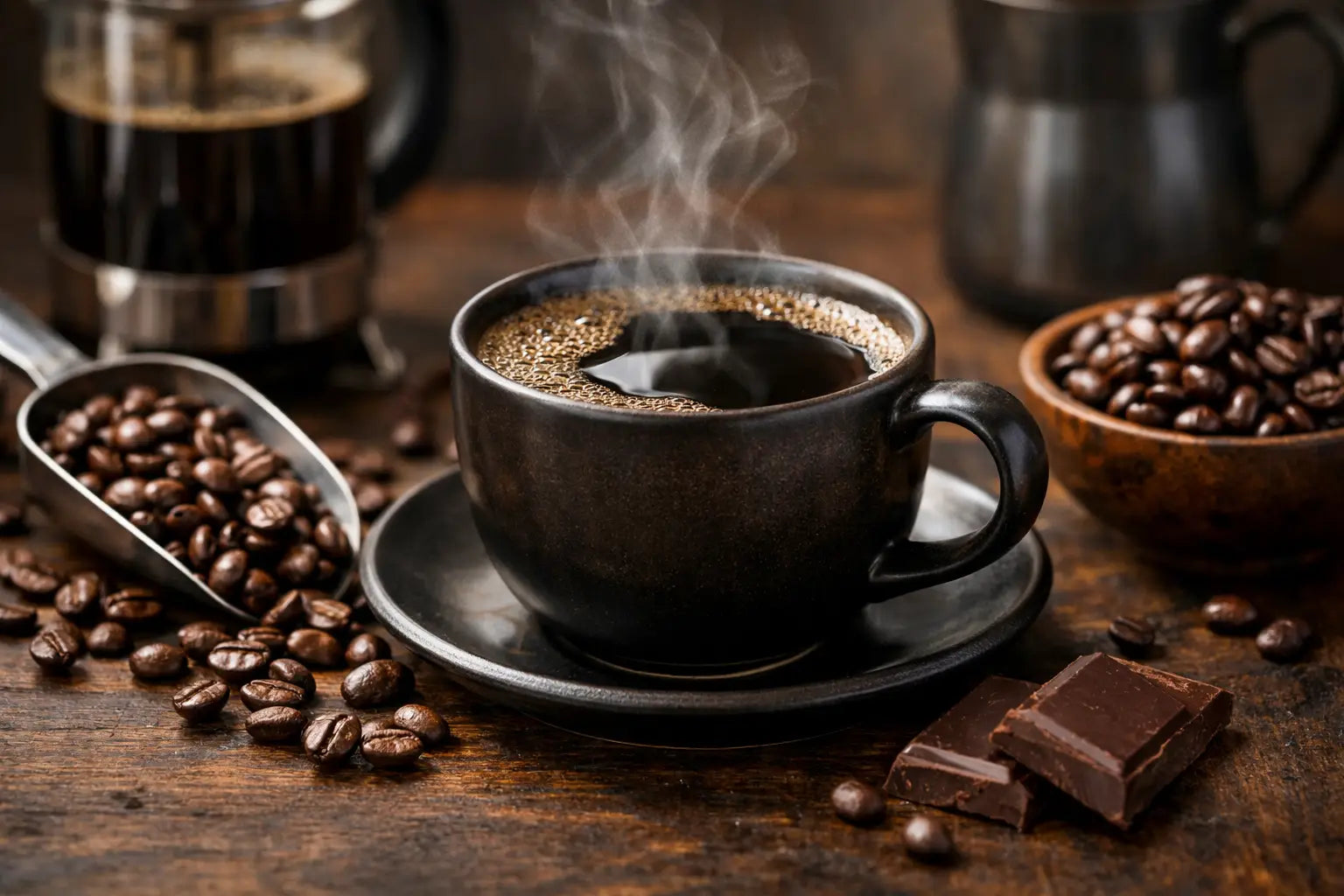
French roast is for the coffee drinker who wants a cup with real presence: deep color, rich aroma, and a bold finish that stands up to cream, busy mornings, and a second refill. But dark should not mean scorched. A great French roast delivers the satisfying depth people expect while keeping the cup smooth, clean, and free from the harsh bitterness that gives dark coffee a bad name.
What Is French Roast Coffee?
French roast is a dark coffee roast, developed well past the point where the beans have browned and expanded. The beans are typically dark brown to nearly black, often with a light sheen of natural oil on the surface. At this roast level, heat has reshaped the bean's flavor profile. Bright origin notes become quieter, while roasted cocoa, toasted sugar, warm spice, and a fuller body move to the front.
Despite its name, French roast is not a specific coffee bean, blend, or place of origin. It is a roast style. A French roast can be made from beans grown in Central America, South America, Africa, or Indonesia, and each coffee will bring its own character before the roasting process guides it toward that familiar dark, full-flavored profile.
That distinction matters when shopping for coffee. “French roast” tells you how the coffee was roasted, not where it came from or whether it was grown with the care you expect. Fresh, specialty-grade organic beans still make the difference between a dark roast that tastes rich and one that simply tastes burned.
The French Roast Flavor Profile
Expect French roast coffee to be bold, low in perceived acidity, and full-bodied. Many drinkers notice flavors that suggest dark chocolate, baker's cocoa, caramelized sugar, toasted nuts, molasses, or a hint of smokiness. It is an especially natural fit for anyone who prefers a hearty cup over a light, fruit-forward coffee.
The trade-off is that a darker roast reveals less of a bean's delicate origin character. If you love floral aromatics, citrus, or berry-like notes, a light or medium roast gives those qualities more room. French roast puts the roast itself in the spotlight. That is not a flaw. It is exactly why dark-roast fans reach for it.
Still, bold flavor and bitterness are not the same thing. Bitterness can show up when coffee is roasted too far, brewed too hot, ground too fine, or left on a burner until it tastes tired. The goal is a dark roast with enough development to taste deep and satisfying, not one that overwhelms every sip with char.
Why a Clean Dark Roast Takes Precision
French roast leaves very little room for error. Coffee beans continue changing quickly at high temperatures, and a few extra moments can shift a batch from smooth and chocolatey to flat, smoky, or ashy. That is why precision matters more than roast color alone.
At House of Franks Coffee, precision fluid-bed roasting keeps the beans moving in a coffee tornado of clean hot air. This approach helps roast each bean more evenly while carrying away chaff, the papery outer layer released during roasting. The result is a cleaner-tasting cup with rich dark-roast character and none of the stale, oily heaviness many people associate with grocery-store French roast.
Roast-to-order production matters here, too. Coffee begins losing its peak aroma after roasting. A fresh French roast can smell like dark cocoa and toasted caramel before the water even hits the grounds. An old bag may still look dark and smell “strong,” but strength is not freshness. When the aromatics fade, the cup can taste dull, sharp, or hollow.
How to Brew French Roast for a Smooth Cup
French roast is flexible enough for most home brewing methods, but the method changes what you notice in the cup. A drip brewer makes an easy, balanced daily mug. A French press highlights body and richness. Espresso creates a concentrated, syrupy shot with a deep crema, while cold brew can soften the roast even further into a mellow, chocolate-forward drink.
For a reliable starting point, use clean filtered water and roughly 1 to 2 tablespoons of ground coffee for every 6 ounces of water. Adjust from there. More coffee adds intensity and body. Less coffee creates a lighter cup, though going too light can make a French roast taste thin rather than smooth.
Water temperature also deserves attention. Aim for water just off the boil, around 195 to 205 degrees Fahrenheit. If your coffee tastes aggressively bitter, do not assume the roast is the only cause. Try a slightly coarser grind, a shorter brew time, or cooler water. Over-extraction pulls unpleasant compounds from the grounds, and dark roasts can reveal that mistake quickly.
For a French press, use a coarse grind and steep for about four minutes before pressing slowly. For pour-over or automatic drip, a medium grind is usually the right place to start. Espresso requires a fine grind, but consistency matters more than chasing a universal setting. Every grinder, machine, and coffee drinker has a slightly different sweet spot.
Is French Roast Stronger Than Other Coffee?
French roast tastes stronger because its flavor is more intense, roasted, and full-bodied. But roast darkness does not automatically mean more caffeine. In fact, caffeine changes very little through roasting when measured by bean count. Because dark-roasted beans are less dense, a scoop of French roast may contain slightly less caffeine than a scoop of lighter-roasted coffee, while measuring by weight makes the difference small.
What most people call “strong” is really a mix of roast flavor, brewing ratio, and concentration. A French roast espresso will feel powerful because it is concentrated. A lightly brewed French roast drip coffee may taste gentler than a medium roast prepared with a heavier dose.
French Roast With Milk, Cream, or Black
This is one reason French roast remains a classic: it can handle additions without disappearing. The roasted cocoa and caramelized notes pair naturally with dairy, oat milk, and a touch of sweetener. It makes a dependable base for cappuccinos, lattes, mochas, and iced coffee.
Black-coffee drinkers can enjoy it just as much, especially when the roast is fresh and clean. Let the coffee cool for a minute before judging it. Extremely hot coffee hides detail. As the cup settles, you may notice more sweetness, a rounder body, and a smoother finish.
If you are moving from a mass-market dark roast, give your palate a few cups to recalibrate. Some old-school dark coffees rely on smoke and bitterness to signal boldness. A carefully roasted organic French roast can taste surprisingly smooth at first, then reveal the depth you were looking for without the rough edge.
Keeping French Roast Fresh
Buy coffee in quantities you can finish within a few weeks of opening, then store it in an airtight container away from heat, sunlight, and moisture. A cool pantry is better than a countertop next to the stove. Avoid the refrigerator, where coffee can absorb odors and encounter condensation.
Grind just before brewing whenever possible. Whole beans hold onto their aromatic oils and flavor longer than pre-ground coffee. If pre-ground is what works for your routine, keep the bag sealed tightly and use it promptly. A practical routine you will keep is better than a perfect setup that never leaves the cabinet.
A well-made French roast proves that dark coffee does not have to be bitter, stale, or one-dimensional. Start with fresh organic beans, brew with care, and let the cup be what it should be: bold enough to wake you up, smooth enough to make you slow down.