Cart
0
The difference between a bright, smooth morning cup and a flat, bitter one can come down to a few overlooked days in the pantry. So, how long do roasted beans stay fresh? For most coffee drinkers, whole beans taste their best from about 7 days after roasting through the next 3 to 4 weeks. They remain perfectly drinkable beyond that window, but the vivid aromatics, sweetness, and clean finish that make great coffee memorable gradually fade.
Freshness is not a switch that flips off on a certain date. It is a steady change driven by oxygen, heat, light, moisture, and time. Buy coffee that is roasted close to when it ships, store it with care, and you will taste the difference in every brew.
How Long Do Roasted Beans Stay Fresh After Roasting?
Freshly roasted coffee needs a short rest before it reaches its full potential. During roasting, beans release carbon dioxide, a natural process called degassing. Brew coffee too soon after roasting and that escaping gas can interfere with water flow and produce a cup that tastes sharp, uneven, or underdeveloped.
For most roast profiles, the sweet spot begins around day 5 to day 7 after roasting. Many medium and darker roasts are especially enjoyable during this period, with fuller body and a rich, settled flavor. Lighter roasts may benefit from a little longer, often opening up beautifully between 7 and 14 days after roasting.
Once the bag is opened, aim to enjoy the beans within 2 to 3 weeks for the strongest flavor. An unopened, properly sealed bag can often hold its quality for 4 to 6 weeks after roasting. It may still make a satisfying cup after that, especially when stored well, but it will not have the same lively character.
That timeline is a guide, not a verdict. A carefully roasted, well-packaged coffee stored in a cool cabinet will outperform a bag left open beside a sunny kitchen window. Roast level, packaging, and brewing method all matter.
Why Coffee Loses Its Freshness
Roasting creates hundreds of flavorful compounds - the chocolatey richness in a dark roast, the caramel sweetness of a balanced medium roast, or the crisp fruit notes of a single-origin coffee. Those compounds are delicate. Once coffee meets air, oxidation slowly softens aroma and flavor.
Oxygen is the main culprit, but it is not working alone. Heat speeds up flavor loss. Light can degrade oils and aromatic compounds. Moisture is even worse, because coffee readily absorbs both humidity and nearby odors. A bag stored beside spices, onions, or strongly scented foods may pick up unwanted flavors before you notice any change in the beans themselves.
Grinding accelerates everything. Whole beans have a relatively small surface area exposed to oxygen. Ground coffee exposes thousands of tiny particles at once, which is why it can lose its sparkle within minutes. Grind only what you need immediately before brewing whenever possible.
The quality of roasting matters, too. Precision fluid-bed roasting uses a coffee tornado of clean hot air to roast beans evenly and carry away chaff. The result is a cleaner cup with bright flavor, smoothness, and no bitterness from scorched or unevenly roasted beans. Freshness protects that work. It cannot restore flavor that was never developed well in the first place.
The Best Way to Store Roasted Coffee Beans
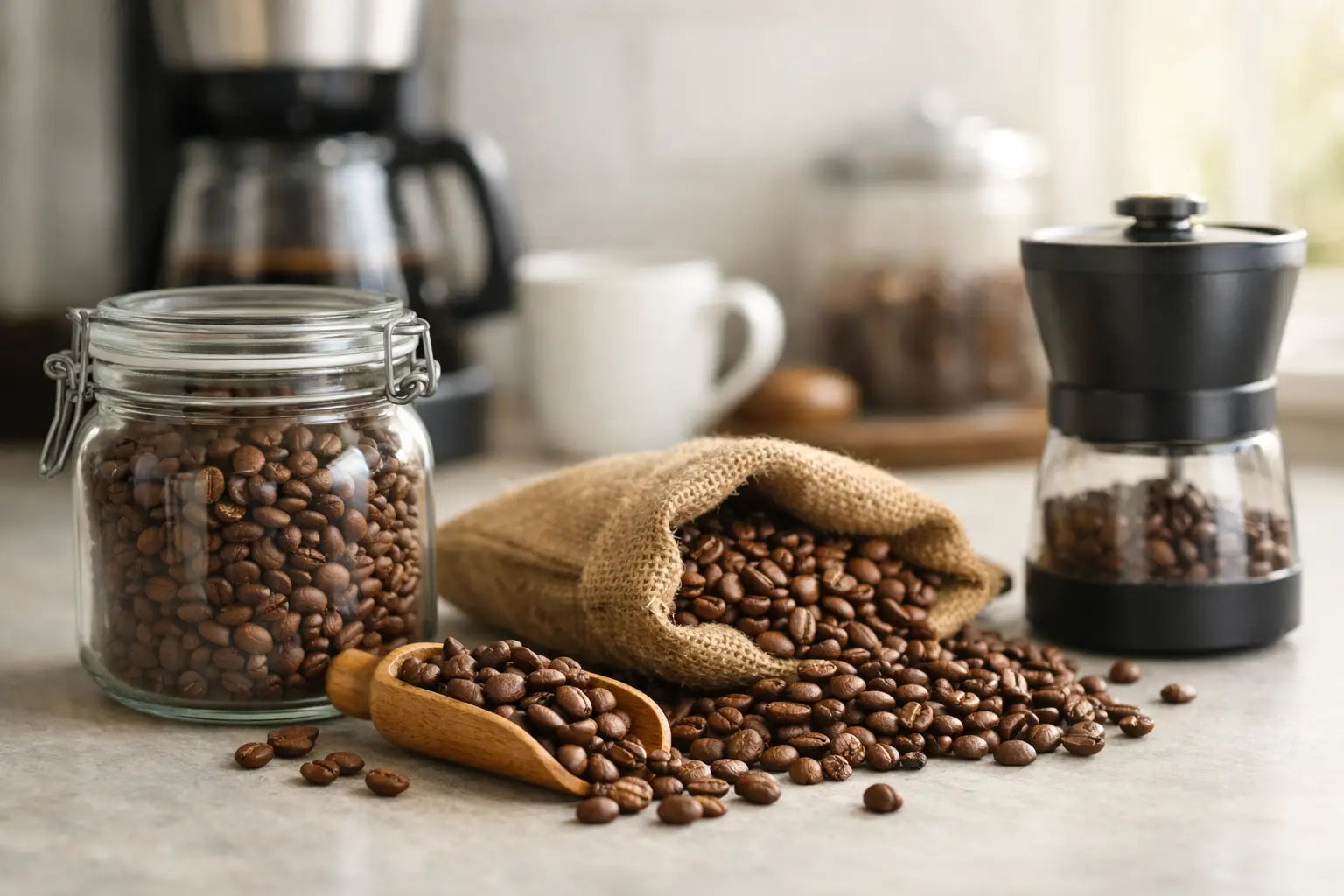
The best storage setup is simple: keep whole beans in an airtight, opaque container at room temperature, away from heat, direct sunlight, and moisture. A kitchen cabinet that stays cool and dry is usually better than a countertop canister sitting near the stove.
If your coffee arrives in a resealable bag with a one-way valve, that bag is often an excellent storage container. The valve lets carbon dioxide escape after roasting without allowing much oxygen in. Press excess air out of the bag before sealing it, then keep it in a dark cabinet.
If you prefer a canister, choose one with a tight seal and an opaque finish. Clear glass jars may look great, but they expose coffee to light unless they are stored inside a closed cabinet. Do not transfer beans into a container that has not been thoroughly cleaned and dried, since lingering odors and moisture can compromise the coffee.
Buy an amount you can realistically finish while it is at its best. For many households, that means a bag every two to four weeks rather than a giant supply meant to last all season. Better coffee is not about hoarding it. It is about giving yourself a fresh, reliable cup every day.
Should You Refrigerate Coffee Beans?
No. The refrigerator is usually a poor home for roasted beans. Coffee is porous, and refrigerators are full of moisture and food odors. Each time a chilled container is opened, condensation can form as the beans warm up. That moisture is not a friend to fresh coffee.
Freezing can work if you have purchased more coffee than you will use within a month or so, but only when done carefully. Divide the beans into small, airtight portions before freezing. Take out one portion at a time and let it come fully to room temperature before opening it. Never repeatedly freeze and thaw the same bag.
Freezing is a backup plan, not the best daily routine. Roast-to-order coffee purchased in sensible quantities does not need a freezer to taste exceptional.
Signs Your Beans Are Past Their Prime
Old beans are not usually unsafe to drink. They simply make a less exciting cup. The first clue is often the aroma. Fresh coffee smells vivid and distinct when you open the bag or grind the beans. Older coffee may smell faint, papery, dusty, or strangely flat.
In the cup, freshness loss often shows up as muted flavor. A coffee that once tasted rich and sweet may seem thin or hollow. Fruit notes disappear first in lighter coffees, while darker roasts can lose their pleasant depth and start to taste ashy or dull. You may also notice that your brewer produces less bloom, the bubbling expansion that occurs when hot water meets freshly ground coffee.
Do not rely on bloom alone. Some coffees naturally bloom more than others, and a lower bloom does not automatically mean bad coffee. Your palate is the better measure. If your usual brew method suddenly produces a cup that lacks aroma, sweetness, and finish, freshness may be the reason.
Freshness Depends on How You Brew
Espresso drinkers tend to notice freshness changes quickly because espresso is concentrated and sensitive to gas levels. Coffee that is too fresh can pull uneven shots, while older beans may run too fast and taste weak. A rest period of 7 to 14 days after roasting is often a dependable starting point, then adjust your grinder as the coffee ages.
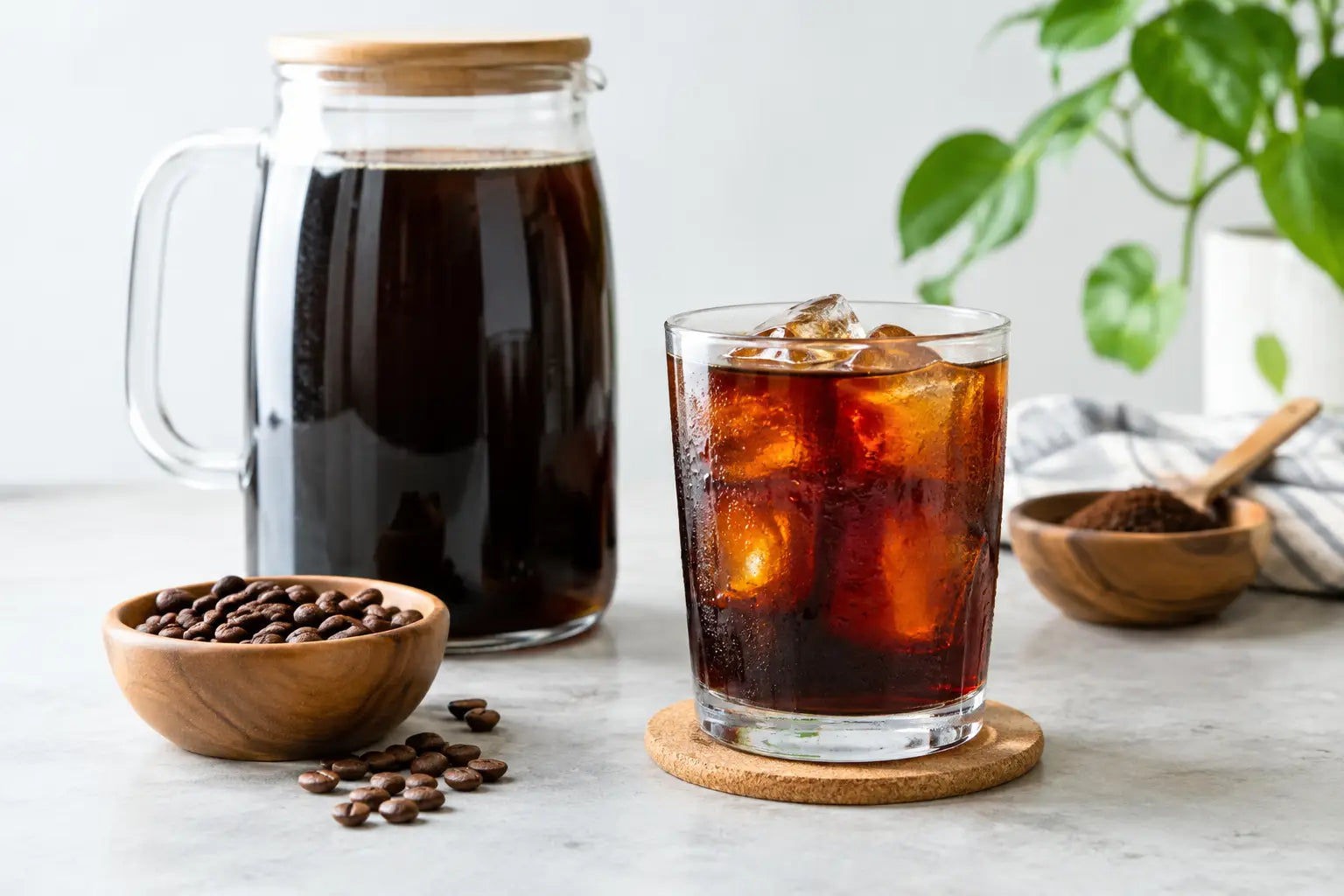
For drip coffee, pour-over, French press, and cold brew, the range is more forgiving. Beans between one and four weeks off roast commonly produce excellent results. Cold brew is especially tolerant because its lower-temperature extraction can smooth out some of the sharper changes in older beans. Still, fresh beans bring more natural sweetness and a cleaner finish to every method.
Pods offer convenience, but freshness still begins with the coffee inside. Look for brands that take roasting and packaging seriously, rather than treating the roast date as an afterthought.
A Better Freshness Routine for Everyday Coffee
A simple routine beats complicated storage rituals. Choose whole beans, check the roast date when available, and buy only what your household will finish in a few weeks. Keep the bag sealed in a cool, dark cabinet. Grind right before brewing. Keep your grinder clean, because old grounds trapped inside can make even fresh beans taste stale.
At House of Franks Coffee, roast-to-order small batches are built around this idea: coffee should arrive ready for its best days, not already halfway through them. Organic beans, careful roasting, and responsible energy practices all matter, but the proof is in the cup - smooth, clean flavor that holds up from the first scoop to the last.
Your coffee does not need a laboratory or a complicated calendar. Give it a cool, dark place, use it while the aroma is alive, and let the next fresh bag be something worth looking forward to.