Cart
0
A great coffee can lose its edge long before the bag is empty. The bright aroma softens, the sweetness fades, and a cup that once tasted smooth and clean can start to feel flat or papery. This coffee freshness storage guide gives you the straightforward rules that protect the flavor you paid for - especially when your coffee is roasted to order.
Fresh coffee does not need complicated rituals. It needs protection from four things: oxygen, heat, light, and moisture. Get those under control, grind only what you need, and your daily brew has a far better chance of delivering the richness, clarity, and no-bitterness finish it was roasted for.
What Fresh Coffee Actually Means
Freshness is not the same as “newly opened.” Coffee begins changing after roasting, when flavorful oils and aromatic compounds meet oxygen. That process is natural, but it speeds up when beans sit in a warm, bright place or are exposed to open air day after day.
Roasted coffee also releases carbon dioxide for a period after roasting. This is why a quality coffee bag often has a small one-way valve. It lets gas escape without inviting outside air in. For most home brewers, coffee often tastes especially balanced after it has had a few days to rest. The exact window depends on the roast profile, bean density, and brew method, but there is no reason to panic if your roast date was last week.
The goal is not to freeze coffee in time. The goal is to slow the forces that steal its character before you brew it.
Coffee Freshness Storage Guide: The Four Enemies
Oxygen is the biggest everyday threat. Each time coffee sits in an open bag, its flavorful compounds react with air. A loose bag folded over with a clip is better than nothing, but a properly sealed package or airtight container offers more protection.
Heat accelerates staling. That means the cabinet above the oven, the counter beside a sunny window, and the shelf near a dishwasher are all poor places for your coffee. A stable, comfortably cool pantry is better. Coffee does not need to be cold for daily use. It needs to avoid temperature swings.
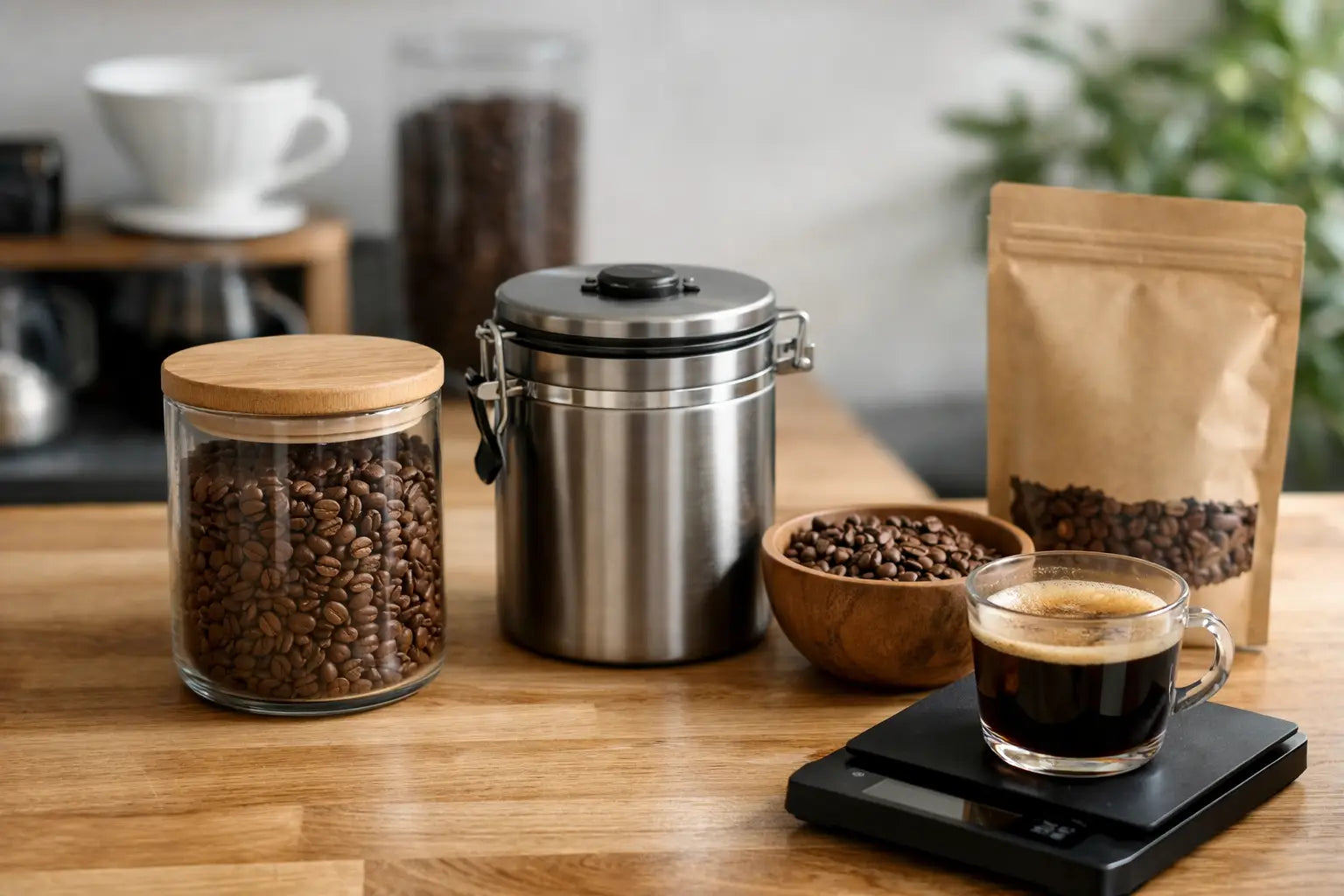
Light can degrade coffee oils, particularly in clear containers. Glass can look sharp on the counter, but a transparent jar puts your beans on display at the expense of flavor. If you prefer a container, choose one that is opaque and airtight.
Moisture is the troublemaker that deserves zero compromise. Coffee readily absorbs humidity and odors. It does not belong in the refrigerator, where condensation, food smells, and frequent temperature changes can work against a clean cup.
Keep Beans Whole Until Brew Time
Grinding turns a whole bean into thousands of tiny surfaces exposed to oxygen. That is necessary for brewing, but it is also why pre-ground coffee loses its aroma faster than whole beans. If you enjoy coffee at home most days, a burr grinder is one of the most practical upgrades you can make.
Grind immediately before brewing whenever possible. You will notice it first in the aroma: lively, recognizable notes instead of a dull generic coffee smell. In the cup, that often means more sweetness, better structure, and a clearer finish.
There are exceptions. For a busy office, travel, or a household that needs speed before sunrise, pre-ground coffee can still make a good cup. Buy smaller quantities, keep the package tightly sealed, and use it promptly. Convenience is a valid part of a coffee routine. Just know that the flavor window is shorter.
The Best Container Is Often the Bag It Came In
Many specialty coffee bags are designed to do their job well. They are opaque, resealable, and fitted with a one-way valve. If you can press out excess air before closing the zipper and keep the bag in a cool, dark cabinet, you may not need another container at all.
If you do use a canister, choose an opaque, food-safe model with a strong airtight seal. Some coffee containers use a vacuum-style lid, which can be useful, though a quality airtight seal is enough for most households. Do not transfer coffee to a container that previously held spices, tea, or flavored snacks unless it has been thoroughly cleaned and fully odor-free.
The best storage setup is also the one you will use consistently. A bag placed back in a dark pantry after each scoop beats an expensive canister left open on a sunny counter.
Portioning Helps Larger Orders Stay Fresher
Ordering enough coffee for several weeks can be smart, especially when you know what your household goes through. The answer is not to open every bag at once. Keep one active bag in the pantry and leave the others sealed until it is their turn.
For larger quantities, portioning is even more useful. Divide coffee into smaller airtight packages before extended storage so you only expose a limited amount at a time. This protects the rest of your supply from the repeated air exchange that happens with every morning brew.
Should You Freeze Coffee?
For coffee you will finish within two or three weeks, pantry storage is usually the simplest and best choice. For coffee you need to keep longer, freezing can preserve flavor surprisingly well when done carefully.
The key is to freeze coffee in small, airtight portions. Use packaging that keeps out air and moisture, then take out only the portion you plan to use over the next several days. Do not repeatedly freeze, thaw, and refreeze the same bag. Condensation is the enemy, and frequent temperature changes create opportunities for moisture to form.
Let a sealed frozen portion come to room temperature before opening it. That keeps room humidity from condensing directly on cold beans. Once it is at room temperature, store and use it like any other active bag.
Freezing is a practical tool, not a requirement. It makes the most sense for limited coffees, bulk purchases, or households that rotate several bags. If you are brewing through one bag quickly, a dark pantry is all you need.
Store Different Coffee Formats the Right Way
Whole beans deserve the most attention because they are often kept the longest. Ground coffee follows the same rules but benefits from smaller purchases and faster use. For both, avoid the refrigerator and keep the package sealed between brews.
Coffee pods are individually protected, so they are convenient for maintaining consistency. Keep them in their box or an enclosed drawer away from heat, light, and steam. A pod carousel beside an espresso machine may be handy, but it can also sit directly in the path of heat and humidity.
Cold brew concentrate has different instructions because it is already brewed. Follow the package guidance, refrigerate after opening, and keep the lid tightly closed. Once coffee has been brewed, freshness becomes a food-safety and flavor question, not just a roasting question.
Buy for Your Real Routine, Not Your Ideal One
The most effective storage habit begins before the coffee arrives. Buy an amount you can reasonably finish while it is still showing its best flavor. For one daily drinker, that might mean a smaller bag more often. For a busy family or office, a larger order can work well if unopened bags remain sealed until needed.
Pay attention to your brewing pattern. Espresso drinkers can go through coffee quickly and may enjoy buying a little more at once. Occasional drinkers may be better served by smaller bags or freezer portions. There is no prize for keeping a massive coffee reserve if half of it goes stale before you can enjoy it.
At House of Franks Coffee, roast-to-order small-batch coffee starts with a freshness advantage. Precision fluid-bed roasting uses a coffee tornado of clean hot air to create a bright, smooth, clean cup. Proper storage carries that work forward from the roastery to your kitchen.
A Simple Daily Routine That Protects Flavor
After brewing, close the bag or canister immediately. Press out extra air from a resealable bag, seal it fully, and return it to a dark, cool cabinet. Keep your scoop clean and dry. Never dip a wet spoon into coffee, even if it seems harmless.
If your coffee begins tasting muted, do not assume the roast is the problem. Check where it has been sitting. A bag left near heat, light, or kitchen steam can lose its best qualities faster than expected. Fresh water, a clean brewer, and the right grind setting matter too, but good storage is the first line of defense.
Treat every bag like the craft product it is. Keep it sealed, cool, dark, and dry, then grind just before brewing. That small act of care gives your next cup the room to taste like it should: organic coffee with real character, smoothness you can recognize, and nothing standing between you and a better brew.